Updated 30 Oct 2026
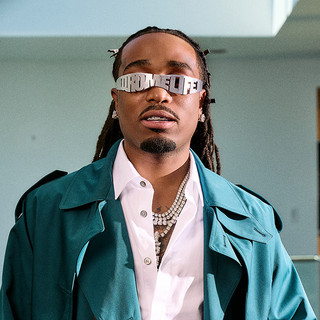
A Quavo type beat is luxury Migos trap. Think the Rocket Power sound: horns, strings and a synth lead stacked big and expensive, with a punchy 808 under it and hats built for the triplet flow that got nicknamed the Migos flow. The darker side, Hotel Lobby and Us vs. Them, swaps the horns for a gospel piano and a saturated top line guitar. Either way the melody usually gets processed hard, a reverse flip, a slicer pass, some RC20 vintage grime, while the drums stay tight and simple so the hook lands in the first bars and there is room left for the ad libs.
You do not need a finished beat to start. The Quavo loops sit in step 1 and again at the bottom, ready to play.
The loops here run 125 to 148 BPM. Most of the Quavo tutorials actually sit in a tighter pocket, 128 to 135, with 130 and 135 being the common starting points. That half-time range is what lets the triplet hats breathe without smearing into a blur.
The key is mostly minor, F minor and D minor show up a lot. Easiest is to take the key straight from your loop and sit the 808 and the melody on the same root so the low end and the chords never fight.
The loops in step 1 stream right here and the mp3 is free. Then work through the six steps.
1. Pick a sample. A brass or strings loop in minor, 128 to 135 BPM, bold and a touch cinematic, or a dark gospel piano if you want the Hotel Lobby lane. Grab one from the list below that already moves before any drums. The melody itself should be dead simple, one or two chords back and forth. You are not trying to impress other producers, you want something easy to build a beat around and easy to rap on.
2. Lay the 808. On the root of the loop key, eight bars kept plain. Draw a volume envelope on it so you have full control of the tail, set it to cut itself so the notes never overlap, and give it some saturation so it pushes. If you run a separate sub bass too, carve out a section that drops the sub so the two never clash and turn the low end to mud.
3. Program the triplet hats. Start with a straight two step, then drop triplet rolls in front of the changes. Hold alt to randomise the velocities so the rolls feel human instead of typed in, and let the pattern follow the eighth note bounce. The triplet feel is the Migos signature, keep it a spice, not a constant.
4. Clap and kick. A hard clap or snare on 2 and 4, plus a quieter second layer pitched down a semitone or two and panned to one side. Clip the kick a touch, turn on boost gain and push it a couple of percent so it cracks, and keep it tucked under the 808 sharing the low end.
5. Try the pitch. Only once the drums sit. Move the whole melody group one or two semitones to fit the voice, then pull the 808 to the new root. Pitching the melody down a full octave is a classic trick for the dark ones.
6. Arrange it. Keep it repetitive like the real records. 16 bars as the hook with the brass full, a verse with one layer gone, a bridge with a different sound. Switch up the 808 pattern in the second half to keep it interesting. Hook early, leave gaps for the ad libs.
The triplet flow, three syllables packed onto one beat, got so tied to the group it became known as the Migos flow even though rappers used it long before. Your hats and your gaps have to invite that cadence.
Zaytoven built the breakout Versace on a piano heavy bounce, and Metro Boomin produced the number one Bad and Boujee. DJ Durel and Quavo himself ran a lot of the later production, and the way they talk about it, the main bounce often comes from the velocity changes on the melody and the drums rather than from a busy pattern. Keep the clap pattern simple so the rapper can ride it.
Leave a pocket on the last beat of every two bars for the skrrt and the ad libs. A Quavo beat is as much about the empty space as the brass. Let the hats follow the 808 with a little velocity randomisation so the rolls feel human, and a roll at the end of a phrase is always a safe move.
There are two lanes. The expensive Rocket Power lane stacks brass or horns with strings and a stock synth lead, big and cinematic, often doubled an octave apart. The darker Hotel Lobby lane runs a gospel or German grand piano for the chords with a saturated electric guitar carrying the top line, the sunburst and LP guitars through a heavy amp or CLA preset. Flutes also sit well on the bright luxury beats, and the free BBC Symphony Orchestra library has usable ones.
Processing the melody is half the job. High pass every melody track, around 115 Hz works, so the 808 owns the bottom alone. To make the hook yours, render a copy, reverse it, and add a short delay and some reverb. A vintage plugin like RC20 adds the grime, a quick pass through a slicer gives it that chopped sample edge, and pitching a layer down an octave thickens it. Detune two layers slightly against each other and pan them left and right so every sound has its own space.
A reverse one shot adds a whole extra dimension. Loop a bar of your melody, record it through Edison, reverse and normalise it, pitch it down and drop it in the intro. Texture and vinyl sounds underneath keep the whole thing alive. The hook should land in the first four bars, that early payoff is what makes the beat placeable.
The position of the loop is not fixed. One or two semitones change the whole mood of the brass or the piano.
Up, the melody gets brighter and thinner, down, it gets heavier and darker, and an octave down is a go to for the dark Hotel Lobby type beats. The key moves with it, so pull the 808 to the new root afterwards.
Triplet rolls on every bar. The triplet feel is a spice, running it nonstop turns the hats into mush and buries the flow.
Melodies that are too busy. Simple MIDIs with one or two chords leave room to stack sounds and give the rapper space. If you are trying to impress other producers, you are overcooking it.
Leaving the lows in every track. High pass each melody layer and watch the sub and the 808 so the low end stays clean instead of muddy.
No room for ad libs. Quavo lives on the gaps, if the brass fills every beat there is nowhere for the hook to land.
Every loop here is played by hand, no AI, and free as an mp3. Pick a brass, strings or dark piano loop below, drop it in, pitch it to the voice and build the drums around it. For a commercial release it is a simple 50/50 split with NDA Company.
Pick a loop and drag it into your DAW. 808 under it, clap on top, your first Quavo beat is running.
All Quavo loopsTempo, key and mood of the Quavo loops, straight from our catalog.
| Loop | BPM | Key | Vibe |
|---|---|---|---|
| Reason | 148 | Cmin | Dark, Virtual |
| Wobble | 140 | A#min | Dark, Epic |
| Magie | 134 | Fmin | Dark, Goofy, Hard |
| Perpeto | 130 | G#min | Ambient, Dark |
| Koherent | 140 | D#min | Dark, Vintage |
| Diamonds | 145 | A#min | Ambient, Dark, Hard |
| Iced Goopa | 148 | Dmaj | Dark, Vintage |
| Listerine | 120 | Dmin | Dark |
| Percocets | 145 | Fmin | Ambient, Dark, Virtual |
| Green Paper | 125 | D#min | Ambient, Dark |
125 to 148 BPM. Most of the tutorials sit tighter, 128 to 135, usually starting at 130 or 135, fast enough for triplet hats to breathe.
Mostly minor, F minor and D minor come up a lot. Easiest is to take the key straight from your loop.
For the bright luxury lane, brass, strings and a synth lead, flutes work too. For the dark lane, a gospel piano and a saturated guitar. Under either, an 808, triplet hats and a hard clap.
A triplet cadence, three syllables on one beat, so tied to the group it got named after them. Your hats and gaps should invite it.
Zaytoven on the breakout Versace, Metro Boomin on Bad and Boujee, plus DJ Durel and Quavo himself on a lot of the later records.
Yes, every loop is a free mp3. A commercial release means a 50/50 split with NDA Company.
They are not royalty-free. Free in your own beats; a 50/50 publishing split with NDA Company applies to every commercial release. License Terms
About NDA · All Artists & Genres · Free Loop Kits · Guides · Free Type Beat Loops · Loops by BPM & key · Splice Alternative
Nothing that fits?
All Quavo loops