Updated 30 Oct 2026
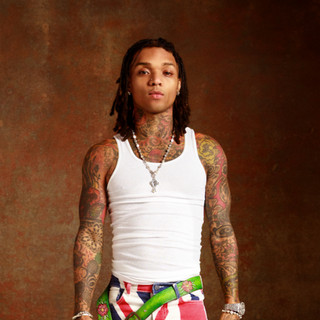
A Swae Lee type beat is built for a voice. The Rae Sremmurd singer, raised on Mike Will Made-It beats, lands his melodic sense somewhere between Young Thug and Fetty Wap, and his records live on wide, reverb-heavy sung hooks. That means the beat should stay airy and open, a dreamy choir or guitar loop over a light bounce, with enough space for a melody to drift on top. The dancehall side, the Unforgettable lane, pulls in a four-on-the-floor kick and a steel pan. Either way the rule is the same: less clutter, more room.
You do not need a finished beat to start. The Swae Lee loops sit in step 1 and again at the bottom, ready to play.
Most loops run 104 to 142 BPM, with the bulk sitting around 119. Producers chasing the slower, dancehall-leaning Swae Lee cut often drop to the high 90s and low 100s, where the sung hook can really drift. The faster end gives you a brighter bounce.
The key is mostly minor, which keeps it dreamy and a little melancholic. Take the key from your loop and put the 808 and the melody on the same root. A trick worth stealing: build on a minor scale that stays on white keys, so you keep the sad minor feel but can brighten it toward major whenever the hook wants to lift.
The loops in step 1 stream right here and the mp3 is free. Then work through the six steps.
1. Pick a sample. Take an airy loop built on choir and guitar in minor, 104 to 142 BPM. Grab one from the list below that feels dreamy and leaves gaps, a melody needs room.
2. Leave space for the voice. Before you add anything, decide where the hook will sit and keep that upper range clear. A Swae Lee beat is a bed for a melody, not a wall. The hardest part of a beat like this is filling it enough to stay interesting without crowding out the singer.
3. Lay the 808 and the bass. On the root of the loop key, kept plain and bouncing. Set it to cut itself so the notes cannot overlap and give it some saturation, then it pushes without getting in the way. Quick way to find the note: take the lowest note of each chord and follow it, same length as the chord.
4. Hi-hats on top. A two-step with the open hat in the gaps and a few rolls before the changes. Keep them light so they float rather than drive. For the dancehall version, swap the shuffle for a steady four-on-the-floor kick, the pulse Unforgettable is built on.
5. Clap and kick. A clap or snare on two and four, softer than a hard trap clap, plus a quieter layer panned to one side. Layer a short room shot pitched to match under the main snare for body. The kick stays under the 808.
6. Arrange. Keep it simple, less is more. Open on the loop almost bare, bring the drums for the hook, strip a layer for the verse. The space is what makes it sing.
The signature Swae Lee move is making the instrument sing. On a piano or synth loop, a slow pitch and timing effect like Gross Beat, momentary slot, slow triplet or a wish-wash preset, adds a gentle wobble and slide that makes the chords feel hummed rather than played. It is the difference between a clean chord progression and a melody you cannot get out of your head.
Short half-step slides into a note do the same thing. Bending up into a chord pushes the instrument toward a human voice, which is exactly the feel you want under a singer. Use them sparingly so the slide stays a detail, not a gimmick.
Give the piano body by doubling the lowest note of each chord an octave down and holding it for the whole chord. For more character without changing the harmony, grab the middle note of a triad and move it up an octave, the spread-voicing trick you hear all over radio-pop and Chainsmokers records.
Swae Lee is a singer first. His delivery drifts between low and high, choppy and smooth, so the beat has to breathe around it. A busy beat buries that.
Keep the loop dreamy and drenched in a little reverb, the Mike Will Made-It records lean on airy, gaudy synths and wide space. Let the loop ring out instead of chopping it tight. A long reverb tail, decay around four seconds with the size pulled down so it stays intimate, plus a ping-pong delay, is the fastest way to get that open, floating feel.
Leave a clear lane in the upper register. If you can hum a hook over your own beat with room to spare, you have built it right. Think Black Beatles or Sunflower: simple, floating, memorable.
For the melody, choir, guitar and piano are enough. Keep them airy and let them ring, a touch of reverb for depth, nothing crowded. A reversed chord stab with a heavy reverb tail is a great way to add suspense and air into a gap without stacking another part.
The 808 carries the low end on its own, kept light and bouncing rather than heavy. Set it to cut itself and give it some saturation. For the dancehall lane, a bitcrusher on the bass gives it that gritty, screaming edge the Unforgettable low end has.
Clap and hi-hats hold the grid, but softly. A clap on two and four, light floating hats as a two-step with gaps for the open hat. Shakers and a tambourine with humanised velocities add the island groove without adding weight.
The steel pan is the obvious dancehall sound, but it is also the most overused one. If you want the vibe without sounding like every other beat, reach for a soft square pluck or a muted bell in the same register, or run the steel pan through a bitcrusher to rough it up.
The position of the loop is not fixed. One or two semitones change the whole mood.
Up the melody gets brighter and airier, down it gets heavier and darker. The key moves with it, so pull the 808 to the new root afterwards.
Filling every gap. A Swae Lee beat is a bed for a sung hook, so leave the upper range open instead of stacking layers into it.
Hard, heavy trap drums. Keep the clap and hats light and floating, the mood is dreamy, not aggressive.
Playing every chord dead on the grid. Strum them slightly off, vary the velocities, and the whole thing breathes more like something played by hand.
Only other type beats as a reference. Those are built to rap on, Swae Lee sings. Put on Black Beatles and Sunflower and hear how much space they leave.
Nothing in the steps above depends on the DAW. You need a sampler for the 808, an EQ and a reverb, nothing else.
FL Studio: the 808 goes in a sampler channel with cut itself on and some saturation. Draw the hats and rolls with the paintbrush, send the melody to a reverb bus for air, and put Gross Beat on the melody channel for the slide and wobble. A parametric EQ cutting the lows around 200 Hz and taming the top keeps the loop out of the drums.
Logic: Quick Sampler for the 808, set to mono, hold pulled up in the amp envelope. Step Sequencer for the hats, one bus for the melody tracks with a Channel EQ cutting the lows plus a generous reverb. Flex Pitch or a modulated delay stands in for the Gross Beat slide.
Every loop here is played by hand, no AI, and free as an mp3. Pick an airy choir or guitar loop in minor, drop it in, and you already have the dreamy bed from step 1 to build the drums and 808 around.
Pick a loop and drag it into your DAW. 808 under it, clap on top, your first Swae Lee beat is running.
All Swae Lee loopsTempo, key and mood of the Swae Lee loops, straight from our catalog.
| Loop | BPM | Key | Vibe |
|---|---|---|---|
| Lagos | 125 | D#min | Sad |
| Nachts Wach | 133 | G#min | Sad |
| Bonds | 133 | Fmin | Ambient |
| Rad | 113 | C#min | Sad |
| Silk | 111 | A#min | Ambient, Sad |
| No Control | 140 | Ambient, Smooth | |
| Lifetime | 140 | Amin | Ambient |
| Chest | 105 | Ambient, Happy, Vintage | |
| Dream | 109 | Emin | Ambient, Sad |
| Love | 103 | D#min |
104 to 142 BPM, the bulk sits around 119, with the dancehall-leaning cuts often dropping into the high 90s and low 100s.
Mostly minor, which keeps it dreamy. Easiest is to take the key from your loop.
An airy, open beat with space for a wide, reverb-heavy sung hook, plus a melody that slides and wobbles like a voice. That is the Rae Sremmurd and Mike Will Made-It lane behind Black Beatles and Sunflower.
For the melody choir, guitar and piano. Under it a light bouncing 808, soft hi-hats and a clap. For the dancehall version add a four-on-the-floor kick and a steel pan or soft pluck.
Yes, and it is a step of its own: move the whole melody group one or two semitones. The 808 has to follow.
Yes, every loop is a free mp3. Not royalty-free: a commercial release means a 50/50 split with NDA Company.
They are not royalty-free. Free in your own beats; a 50/50 publishing split with NDA Company applies to every commercial release. License Terms
About NDA · All Artists & Genres · Free Loop Kits · Guides · Free Type Beat Loops · Loops by BPM & key · Splice Alternative
Nothing that fits?
All Swae Lee loops