
Updated 4 Nov 2026
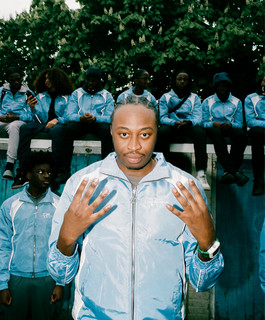
A Fournine type beat is soulful trap-drill: warm, vintage sampled chords, piano and emotional melodies sitting over modern trap and UK drill drums. Fournine is a South East London rapper, also known as 40, in the same melodic lane as Sainté and Nemzzz. The foundation is a flipped soul or jazz sample, pitched down and run through vintage gear until it sounds dusty and old. The drums sit between trap and drill, and the 808 stays simple so the sample can carry the feeling. It is nostalgic and warm but still knocks.
You do not need a finished beat to start. The Fournine loops sit in step 1 and again at the bottom, ready to play.
A Fournine type beat sits in a minor key between 131 and 145 BPM, built around a warm, soulful sampled loop. This lane overlaps with Sainté and Nemzzz, so most of these beats land in the low to mid 140s, with 140 to 143 as the sweet spot, while anything from 131 upward still works for a slower, more emotional feel. Pick your tempo first, because it changes how hard the drums hit against the sample.
The key is minor almost every time. The sample sets it: once you chop a soul or jazz loop and pitch it down, whatever minor key it lands in becomes the key of the whole beat. Tune your 808 to that root and keep any drum melody inside the same scale. Because the emotion lives in the sample, you do not need a clever progression, you need the right loop.
You make a Fournine type beat from a soulful sample, warm vintage processing, a trap-drill drum pattern, a layered 808 and a loose arrangement at 131 to 145 BPM in minor. The loops in step 1 stream right here and the mp3 is free. Start with the sample, make it sound old and warm, then build the drums and bass around it.
Start with a sample, that is where the whole vibe comes from. You can grab a ready loop or chop a real soul or jazz record yourself. Find four bars you like, drop them on the grid, and time stretch them to your tempo. Flex Time in Logic, the stretch markers in FL or Ableton's Complex Pro warp mode all do the same job.
Pitch the sample down to darken it. In the reference flip the whole loop went down eight semitones, which instantly makes it heavier and more emotional. Use Flex Pitch or your DAW's pitch tool and trust your ear over the exact number.
For more control, bounce the loop in place and run it through a stem splitter to pull the piano out on its own. Then you can pitch just the piano down an octave, push it louder, and bounce the layers back together into one fuller sample. That little bit of resampling is what turns a flat loop into something that sounds produced.
The vintage character is half the sound. Put Halftime on the sampled loop and push it toward the 1.5 setting to pitch and slow it, then add ShaperBox to give the loop movement and texture instead of leaving it static.
Bus your sample layers together and run light compression to tighten them, then an RC-20 for that dusty, old-record character. If you have them, Verve Analog Machines or a cassette emulation do the same warm, lo-fi job, and tape saturation sits well on this style. The goal is for everything to sound like it came off the same vinyl.
When you add a second melodic layer, a trumpet, strings or a counter piano, process it with the same vintage chain so it glues to the main sample. In the reference a Splice trumpet loop was chopped and pitched, and once the vintage plugins were on it, it sounded like part of the original record rather than a loop pasted on top. It does not even have to be perfectly in time, with everything playing together you stop noticing small timing slips.
The drums sit between trap and drill, and that mix is the signature. Keep the kick and clap simple but break the trap rule on purpose: drop a clap where a straight trap beat would put one, or move the backbeat clap onto the fourth beat the way drill does. Those small displacements are what make it bounce like a UK beat instead of a generic trap loop.
Layer a second, deeper snare under the clap for weight, and add a couple of extra claps for bounce. On the hats, leave a gap and fill it with a drill style shaker as a counter rhythm, then stack a second hat with the shaker, an open hat on the offbeats and the odd FX hit. Keep the percussion subtle, a few soft perc hits are enough.
Keep the 808 pattern basic and let it play with the kick. The quick trick is mixing long 808s with short ones, which gives the low end bounce instead of one flat sustained note. Many producers layer two 808s, a main one and a second that reinforces it, and tune both to the sample's root.
Process the 808 so it cuts through: a Serum FX chain or similar for a touch of distortion, compression and filtering, an EQ to clear the lows that clash with the kick, and a transient shaper like Neutron to add attack so the bass punches through the busy sample.
Arrange loosely and leave space. Do not drop every element in at once. Open with just the sample, bring in the drums and the 808 without the kick, then let the kick land. Make cuts, pull the kick out for a bar because an empty kick moment always hits, run a verse section with only the sample and drums, then bring everything back with the second melodic layer. There is no right or wrong structure, you are chasing a flow that feels good.
The biggest mistake is a clean sample. This sound lives on dust and warmth, so a crisp, untreated loop kills it instantly. If you skip the pitch down, the Halftime, the RC-20 and the tape or cassette colour, your beat sounds like a stock sample sitting on top of drums instead of a flipped record. Commit to making the sample sound old.
The second mistake is making the drums too straight. If you program a textbook trap pattern with the claps exactly where they are expected, you lose the drill bounce that defines this lane. Break the pattern, move a clap, drop one, lean on the shaker.
The third mistake is a flat, lifeless 808 and a cluttered arrangement. A single sustained 808 with no long and short variation drags, and dropping every layer in at once leaves the beat nowhere to go. Mix your 808 lengths, tune to the sample, and build the arrangement in stages with real cuts and empty moments so an artist has room to ride it.
Every loop here is played by hand, no AI, and free as an mp3. Load one, take its key and tempo as the foundation of your beat, warm it up with a bit of vintage processing if you want, then add your own trap-drill drums and a layered 808 on top. That gets you past the hardest part of a Fournine type beat, the soulful sample, in seconds.
Pick a loop and drag it into your DAW. 808 under it, clap on top, your first Fournine beat is running.
All Fournine loopsTempo, key and mood of the Fournine loops, straight from our catalog.
| Loop | BPM | Key | Vibe |
|---|---|---|---|
| Blockparty | 140 | Happy, Vintage, Ambient | |
| For Life | 145 | Fmin | Ambient, Happy, Vintage |
| Readthesign | 131 | Cmin | Happy, Vintage |
| Drake | 140 | Ambient, Vintage | |
| Cordae | 140 | Ambient, Vintage | |
| Chop me | 140 | Dark, Vintage | |
| Pollos Hermanos | 140 | Happy, Vintage |
Between 131 and 145 BPM, with most landing around 140 to 143. Slower tempos near 131 feel more emotional, so pick the speed that fits the sample.
Minor. The chopped soul or jazz sample sets the key, so take it from your loop, tune your 808 to that root and keep the drum melody in the same scale.
A soulful sampled loop or piano as the centrepiece, a layered 808, trap-drill drums, and vintage processing like RC-20, a tape or cassette emulation, Halftime and ShaperBox for warmth and movement.
Blend trap and drill: keep the kick and clap simple but drop or move a clap onto the fourth beat, layer a deeper snare, and add a drill shaker as a counter rhythm under the hats.
Start with the sample. Chop a soul or jazz loop, put it on the grid, pitch it down to darken it, and make it sound warm and old before you touch the drums.
Yes, every loop is a free mp3. Not royalty free though: a commercial release means a 50/50 split with NDA Company.
They are not royalty-free. Free in your own beats; a 50/50 publishing split with NDA Company applies to every commercial release. License Terms
About NDA · All Artists & Genres · Free Loop Kits · Guides · Free Type Beat Loops · Loops by BPM & key · Splice Alternative
Nothing that fits?
All Fournine loops