Updated 30 Oct 2026
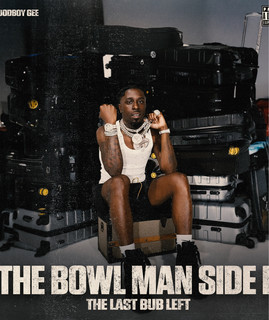
Woodboy Gee sits in the dark Florida street-rap pocket, best known from features alongside Tallahassee artists like Real Boston Richey and Karri DaFinesser on cuts such as No Ecstasy. That corner of rap pairs Florida slang with Detroit-leaning trap: ominous piano, icy or turned-up textures and distorted drums. So the beat is dark and piano-led, a low 808 under it, drums with some grit, built for a hard, street-level delivery.
You do not need a finished beat to start. The Woodboy Gee loops sit in step 1 and again at the bottom, ready to play.
Most loops run 136 to 158 BPM, with the drums usually half-time so the beat feels heavy while the hats stay busy.
Some producers push a touch faster, up toward 160, and the beat still sits heavy because the drums stay half-time. The tempo you pick matters less than keeping that half-time weight under busy hats.
The key is mostly minor, which carries the dark, ominous mood this pocket lives on. A plain natural minor scale is usually all you need. Take the key from your loop and put the 808 and the melody on the same root.
The loops in step 1 stream right here and the mp3 is free. Then work through the six steps.
This pocket blends Florida street rap with Detroit-style trap, which is why the drums often sound a little distorted and off the grid rather than clean and quantized.
Keep the mood ominous. A simple dark piano figure with a cold edge does more than a busy, pretty melody. The beat should feel like a threat, not a mood board.
Piano and a Rhodes-style electric piano are the core, an FL Flex or similar electric piano works well kept dry, with just the plugin's own delay and reverb dialled in rather than a long effect chain. The acoustic piano carries the dark figure, the electric piano can double it an octave up or add a warmer counter-line.
Keep the figure short and repetitive. High-pass both keys so the 808 owns the low end, and let a touch of reverb give the keys a cold room rather than a warm hall. Vintage synths like Arturia's CMI, Emulator or OP-Xa layer well over the keys for cold accents, and copying the electric-piano pattern onto a pad preset thickens the chords without a new melody.
A clean build order helps in this pocket: start with the dark chord figure, add one melodic lead over it, then the bass, then any strings, and leave the drums for last. Getting the keys and the lead to sit together before the 808 goes in stops the low end from hiding a thin melody.
A dark saxophone makes a strong lead over the piano, played sparse and a little mournful rather than busy. A vintage synth line works the same way. Keep those accent sounds dry and lean on the plugin's own delay or a tape delay instead of a long insert chain, the way the keys stay dry. Strings come in thin and high over the top, more texture than melody, and a short accent figure that only plays in the intro and the first few bars often lands harder than one that runs the whole beat.
The Detroit influence shows in the drums. Nudge hats and snares slightly off the grid, let the pattern breathe instead of locking it dead-straight. A typical kit is an 808 and kick, a snare, two hi-hat patterns with one kept for the hook variation, an open hat, a couple of perc hits and a crash.
Add a little distortion or saturation to the snare and 808 so the drums bite. A clean, perfectly quantized pattern loses the street edge this style is built on.
Making it too pretty. The mood is dark and ominous. A bright, happy loop misses the whole point of this pocket.
Drums too clean and stiff. The Detroit lean wants a little grit and a little swing. Nudge the hats off-grid and add saturation.
Leaving the lows in every track. High-pass the keys and the cold layer so the 808 owns the bottom, or the low end turns muddy.
Building the drums first. Lock the chords and the lead before the 808 and the hats, or you end up decorating a weak melody with busy drums.
Nothing above depends on the DAW. A sampler for the 808, an EQ, a saturator and a reverb is enough.
FL Studio: 808 in a sampler channel with cut itself on, a bit of distortion after it. Nudge the hats off the grid by hand, draw rolls with the paintbrush.
Logic: Quick Sampler for the 808 set to mono, Overdrive after it, Step Sequencer for the hats with humanize on, a Channel EQ high-passing the keys.
Every loop here is played by hand, no AI, and free as an mp3. Pick a dark minor piano loop, drive a low 808 under it, and the ominous street mood is already there.
Pick a loop and drag it into your DAW. 808 under it, clap on top, your first Woodboy Gee beat is running.
All Woodboy Gee loopsTempo, key and mood of the Woodboy Gee loops, straight from our catalog.
| Loop | BPM | Key | Vibe |
|---|---|---|---|
| Catholic | 140 | F#min | Dark, Hard, Turned |
| Packet | 148 | A#min | Ambient, Dark, Virtual |
| Realtime | 140 | Amin | Dark |
| Mixed Reality | 136 | D#min | Dark, Hard, Turned |
| Blockparty | 140 | Happy, Vintage, Ambient | |
| PBS | 133 | F#min | Turned |
| GSD | 157 | Dmin | Dark, Turned |
| Henessy | 138 | D#min | Ambient, Happy |
| Smooth | 140 | C#min | Ambient |
| Lenken | 140 | Amin | Ambient |
136 to 158 BPM, with the drums usually half-time so it feels heavy under busy hats. Some beats push up toward 160 and still sit heavy for the same reason.
Mostly minor, for the dark, ominous mood. Easiest is to take the key from your loop.
A dark piano and electric piano for the melody, an optional cold high texture or a dark saxophone lead, and under it an 808, hi-hats and a gritty snare.
A simple order is chords first, then one melodic lead like a saxophone or a synth, then the bass, then any strings, and the drums last. Lock the melody before the 808 so the low end is not covering a thin idea.
Dark and ominous. Florida street rap with a Detroit-style trap edge, ominous keys and slightly distorted drums.
The Detroit lean wants grit and swing. Off-grid hats and a little distortion keep the street edge a clean pattern loses.
Yes, every loop is a free mp3. For a commercial release it is a 50/50 split with NDA Company.
They are not royalty-free. Free in your own beats; a 50/50 publishing split with NDA Company applies to every commercial release. License Terms
About NDA · All Artists & Genres · Free Loop Kits · Guides · Free Type Beat Loops · Loops by BPM & key · Splice Alternative
Nothing that fits?
All Woodboy Gee loops