
Updated 30 Oct 2026
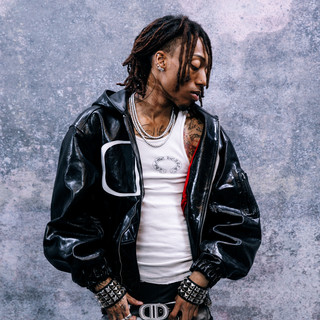
A Lil Tecca type beat is bright and melodic, built on a woozy electric piano or a plucky synth with a catchy little figure that could be a hook on its own. Since plan A and Dopamine the sound leans straight into new jazz, seventh and ninth chords on a Rhodes-style electric piano with a jazzy swing. He broke out with Ransom, cut by Nick Mira and the Internet Money camp, and the newer records run through Taz Taylor and that same circle. It is a pop song structure wrapped around booming 808s and airy, auto-tuned vocals. Keep the melody simple and singable and let the drums do the pushing.
You do not need a finished beat to start. The Lil Tecca loops sit in step 1 and again at the bottom, ready to play.
Most loops sit between 120 and 140 BPM. The newer new jazz cuts run slower than the old Ransom era, so a lot of producers start around 120 to 128 and let the swing carry it. Pick the tempo that reads as calm but still bounces under the hats.
The key is mostly minor, but kept bright rather than dark. C minor and F sharp minor come up again and again. Take the key straight from your loop and put the 808 and the melody on the same root.
The loops in step 1 stream right here and the mp3 is free. Then work through the six steps.
The Tecca sound came up through Nick Mira, Taz Taylor and the Internet Money collective, the same camp behind Ransom, and the album cuts keep Taz and that circle on the boards. Their trademark now is a new jazz progression over booming percussion and 808s.
Build it from seventh chords in the natural minor scale. Set scale highlighting to your root in minor, then stack a chord by taking the first note, skipping one, adding the next, and so on up to the seventh. Minor seventh and minor ninth chords are the whole new jazz vocabulary. Revoice a chord by selecting the top one or two notes and dropping them an octave, which gives the jazzy colour without changing the chord. Owa Owa even flips a loop from the Buggles over that formula.
Keep the lead clean and in the upper range so the auto-tuned vocal can float on top. A monophonic synth with glide turned on, set to slide between overlapping notes, works as the lead, and a bell or second layer playing the chords broken, one note after another, fills it out. A pad with a slow attack sits behind everything for ambience. Busy, muddy melodies fight the voice, a clear figure invites it.
For the melody a Rhodes-style electric piano carries the chords, a monophonic pluck or square lead takes the top line, and a wood hit bell or soft pad fills the gaps. Stage 73, JV-1080 and Analog Lab style Rhodes presets all land in the pocket. Keep the loop dry and bright and let it breathe instead of burying it.
Humanize the chords: nudge the velocities with the randomize or humanize tool and drag the start times off the grid by holding alt, so the keys do not sound stiff. A touch of vintage colour from something like RC20 Retrocolor, a little chorus to widen it, and a short reverb is all the processing it needs.
The 808 carries the low end. The Spins 808 is a generic go to and sits in a ton of trap. A second 808 handles the gaps and 808 slides on the switch ups. Set it to cut itself and give it saturation, then it pushes without a long chain.
Clap and hi-hats hold the grid. A soft clap or snare on two and four, a counter snare for texture, and bright busy hats as a two-step with gaps for the open hat.
Sidechain the 808 to the kick so the 808 ducks when the kick hits and swells back in. Push the release up and it comes back slowly, which gives that pumping new jazz low end. On the album records the sample and the kick get sidechained too.
Route all the melody tracks to one bus, cut the lows with an EQ so they leave room for the 808, bring up presence, and even them out with light compression. Automate a ShaperBox style reverse effect every other bar for movement, add chorus and a short delay to widen, and set reverb per layer so the pad sits furthest back.
The position of the loop is not fixed. Merge or consolidate the melody into one audio clip, then pitch it. Many producers render the full melody and pull it down two or three semitones for a heavier key.
Up the melody gets brighter and thinner, down it gets heavier and darker. If you pitch a vocal in to match, move it by the same interval, so an E minor vocal goes up two semitones to land in F sharp minor. The key moves with it, so pull the 808 to the new root afterwards.
Too much stacked up. A few clear sounds carry the whole beat, every further layer after that only takes up room the vocal needs.
A dark, heavy melody. The Tecca sound is bright and poppy new jazz, so keep the lead in the upper register and resist dragging it down.
Flat, basic chords. Plain triads sound stiff. Revoice them, saucing them up with minor seventh and ninth extensions, and humanize the timing.
Only other type beats as a reference. Those are built to rap on, the originals sound different. Put on Ransom, plan A and Dopamine first.
Nothing in the steps above depends on the DAW. You need a sampler for the 808, an EQ and a reverb, nothing else.
FL Studio: the 808 goes in a sampler channel with the envelope set to quit as the note ends and some saturation in the channel effects. Change the snap to grid to a half step for hat rolls and to a third for the triplet bounce. Draw the hats with the paintbrush instead of slicing them.
Logic: Quick Sampler for the 808, set to mono, and pull the hold up in the amp envelope. Step Sequencer for the hats, one bus for all melody tracks with a Channel EQ cutting the lows plus a reverb.
Every loop here is played by hand, no AI, and free as an mp3. Load one, trace the root notes under it with your 808 and you already have the new jazz foundation.
Pick a loop and drag it into your DAW. 808 under it, clap on top, your first Lil Tecca beat is running.
All Lil Tecca loopsTempo, key and mood of the Lil Tecca loops, straight from our catalog.
| Loop | BPM | Key | Vibe |
|---|---|---|---|
| Aftersun | 120 | G#min | Ambient, Virtual |
| Barely | 120 | Fmin | Ambient, Virtual, Wavy |
| Burst the Bubble | 140 | F#min | Happy, Virtual, Ambient |
| Easily | 120 | Emin | Ambient, Happy, Hyper, Virtual, Wavy |
| Doorbell | 140 | C#min | Goofy, Happy, Virtual |
| Looney | 140 | Bmaj | Ambient, Happy, Virtual |
| Boing | 140 | Bmin | Happy, Hyper, Virtual |
| Headstart | 140 | Amin | Ambient, Happy, Virtual |
| Isolin | 140 | Bmin | Happy, Virtual |
| Forensic | 130 | Emin | Ambient, Hyper, Virtual |
Mostly 120 to 140 BPM. The newer new jazz records run slower, so a lot of producers start around 120 to 128.
Mostly minor, kept bright rather than dark, often C minor or F sharp minor. Easiest is to take the key from your loop.
A bright, hooky new jazz melody on seventh and ninth chords over booming 808s and busy hats, the Internet Money, Nick Mira and Taz Taylor formula behind Ransom, plan A and Dopamine.
For the melody a Rhodes-style electric piano, a monophonic pluck or lead and a bell or pad. Under it an 808, a layered kick, bright hi-hats and a soft clap.
Build seventh chords in the minor scale, skipping every other note, then revoice them by dropping the top one or two notes an octave. Minor seventh and minor ninth chords are the whole new jazz sound.
Yes, and it is a step of its own: merge the melody to one clip, then move it one to three semitones. If you add a vocal, pitch it by the same interval to match. The 808 has to follow either way.
Yes, every loop is a free mp3. Not royalty-free: a commercial release means a 50/50 split with NDA Company.
They are not royalty-free. Free in your own beats; a 50/50 publishing split with NDA Company applies to every commercial release. License Terms
About NDA · All Artists & Genres · Free Loop Kits · Guides · Free Type Beat Loops · Loops by BPM & key · Splice Alternative
Nothing that fits?
All Lil Tecca loops